Industry Background
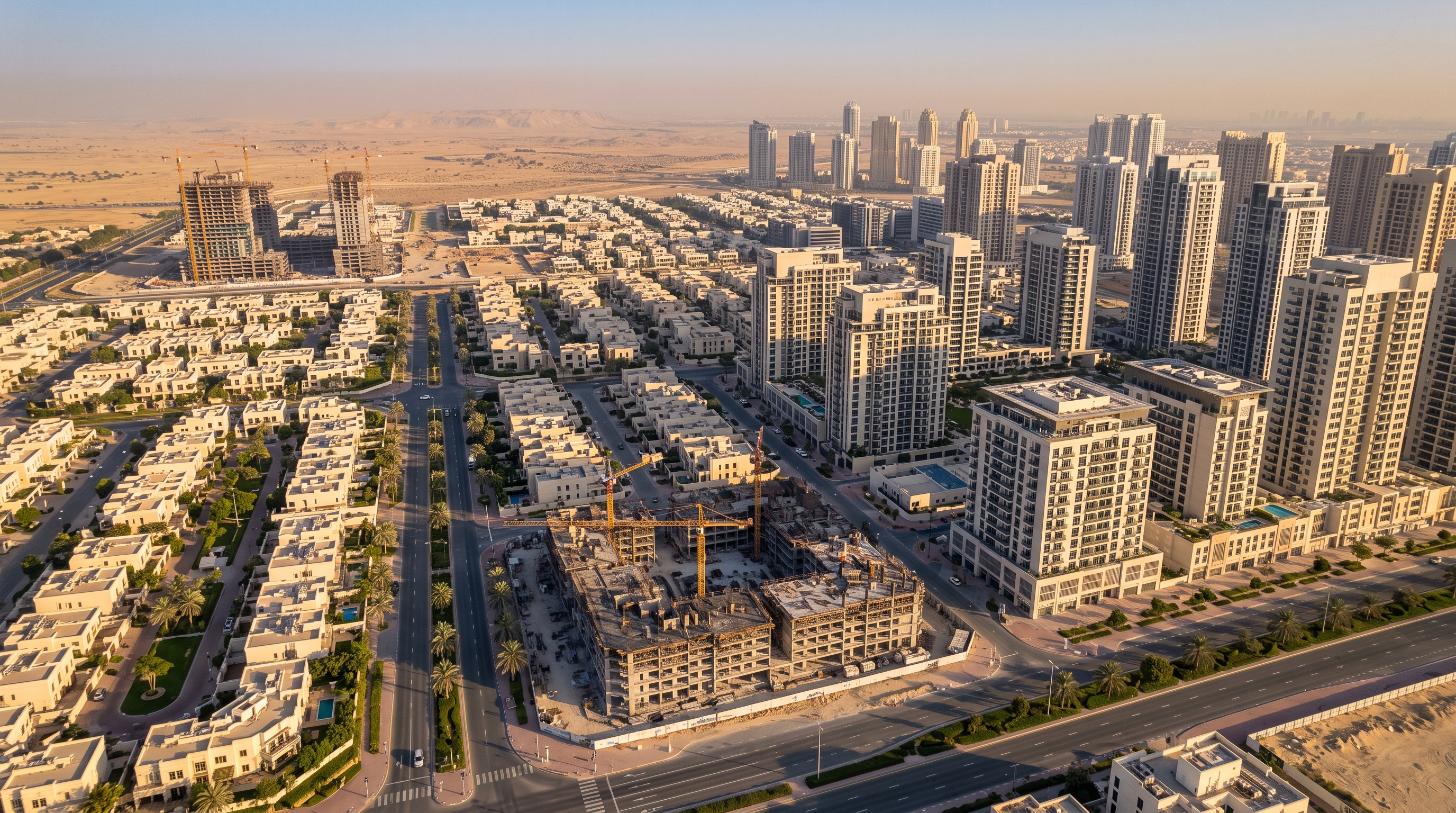
Dubai's residential market ran through an exceptional four-year expansion following 2020, driven by residency reforms, capital inflows, and the emirate's positioning as a safe-haven destination during successive periods of global disruption. Prices and transaction volumes both reached record levels.
Two forces are now working against that trajectory. Supply is arriving in volume: industry estimates point to roughly 60,000 new homes delivering annually through 2028, approximately double the historical average. And regional geopolitical conditions have made some international buyers more cautious.
The current phase is characterised by dispersion rather than uniform decline. In August, around 73 per cent of freehold villa communities and 61 per cent of freehold apartment communities held stable values, while price per square foot in some segments continued to rise even as aggregate transaction value fell.
Why This Matters
The defining feature of this turn is that it is a supply-driven normalisation, not a demand collapse. Population growth, business formation and residency demand remain positive. What has changed is that buyers now have options and time.
This is a healthier market structurally, but it is a materially different one commercially. In a rising market, delivery quality and developer credibility are secondary — the asset appreciates regardless. In a market with abundant supply and cautious buyers, they become the primary differentiators. The consensus at this week's International Property Show was direct: there is no longer room for developers who cannot deliver.
For the wider economy, the shift matters because real estate is a significant driver of UAE construction, banking, professional services and consumer sentiment.
Implications for Businesses
Developers face a genuine strategic reset. Speculative launches priced on future appreciation will find shallower demand. Differentiation must come from location, product specification, delivery track record and payment terms. Developers with weak balance sheets or thin delivery records are most exposed.
Brokerages and property services firms should expect margin compression as transaction volumes decline. The firms that hold up will be those shifting from transaction facilitation toward advisory — valuation, portfolio strategy, yield analysis — where differentiation is possible.
Construction and contracting firms should anticipate a lag before pipeline effects arrive, and should stress-test client creditworthiness now rather than after delivery slippage.
For businesses outside real estate, there is a favourable dimension: moderating residential values and softening rents ease employee cost-of-living pressure, which supports talent attraction and retention.
Implications for the UAE Market
A period of price moderation improves Dubai's long-term competitiveness. Extreme housing costs are a recognised constraint on talent attraction, and the emirate's ranking strength in human capital depends partly on remaining liveable for skilled professionals at mid-career income levels.
The risk to monitor is concentration. If declines remain dispersed and community-specific, the market absorbs the adjustment. If weakness broadens across segments simultaneously, the effects transmit to bank lending portfolios and construction activity.
Abu Dhabi and the northern emirates may see relative benefit as value-conscious buyers and tenants look beyond Dubai.
Implications for International Companies
For international investors, entry economics are improving. Lower capital values with stable-to-rising rents in many communities means yields are expanding. Buyers with genuine long-term horizons are in a better position than at any point since 2021.
For companies relocating staff to Dubai, housing cost assumptions built on 2024–25 data are now out of date. Relocation budgets and cost-of-living allowances should be revisited.
International developers and capital partners should reassess entry pricing and, critically, local partner selection. Delivery capability is now the decisive due diligence criterion.
Suggested Actions for Executives
-
Rebase any business plan that assumed continued Dubai residential price appreciation.
-
Developers: shift capital toward completing and delivering current projects rather than launching new ones. Delivery record is now the primary marketing asset.
-
Investors: analyse at community and asset level, not market level. Aggregate indices are concealing significant dispersion.
-
Employers: review housing allowances and relocation packages against current market rents — there may be cost savings available.
-
Lenders and suppliers to the sector: run counterparty credit reviews on developer clients now.